REDESIGNING INFORMAL BEIRUT: SHAPING THE SUSTAINABLE TRANSFORMATION STRATEGIES
brainymediaagency@gmail.com
April 22, 2025
REDESIGNING INFORMAL BEIRUT: SHAPING THE SUSTAINABLE TRANSFORMATION STRATEGIES
brainymediaagency@gmail.com
April 22, 2025
Key Words
Complex city, Informal settlement, Immigrants, Interconnected city, Sustainable development, Urban transformation; Reinventing Beirut.
Abstract
Lebanon is distinguished by its strategic geographic location among the Arab countries. Beirut, as the capital city and major commercial and cultural center of the country, is a point of interest for migrants. The region has witnessed many changes in the post-WWII times, which resulted in external and internal conflicts, migrations, centralization of the country’s economy, etc. Also, the city witnessed many periods of urbanization, destruction, reconstruction, and regeneration, which contributed to the complex nature of the city’s population and blurring boundaries between settlements of different nature. As a result, Beirut has become home to mixed communities and societies of different origins and nature. The extensive inflow of migrants combined with economic crises contributed to the appearance of informal settlements. Located in different areas of the city and its surrounding, known as Greater Beirut. These settlements face various challenges, which include spatial organization, socio-economic standing as well as environmental ones. The current situation in Lebanon (results of COVID-19 pandemic combines with the 4th of August 2020 blast in the Port of Beirut) make these challenges more appalling. One of the key issues discussed in this paper is associated with the origin, current state and prospects for improving the urban quality of these informal settlements having in mind their unplanned development and underused potentials. The article includes the inventory and speculates on the best possible strategies derived from three local interventions based on references. Those examples represent rehabilitation and reconstruction activities in different cities in Lebanon. They can be applied in the specific situation of Beirut, given the variety of the possible context there. The authors’ initial intention is to deal with the possible scope of the physical improvement in these settlements which will lead to socio-economic and environmental development and will also include possible ways of reinventing Beirut’s urban structure.
Read the full paper on the Urban Planning Journal .
View More.
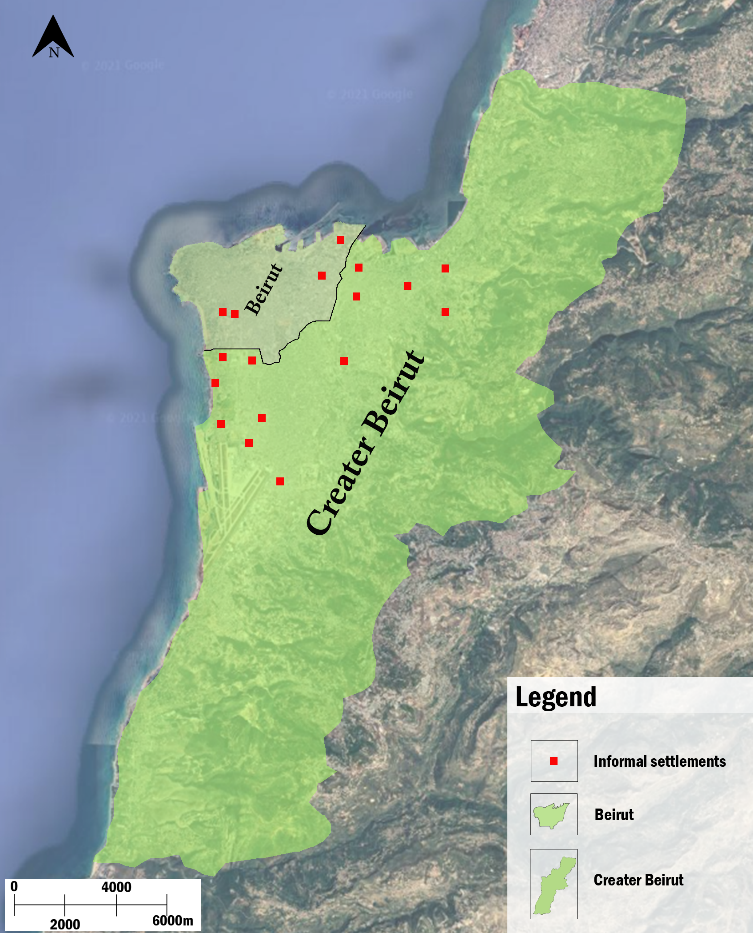
Geographical boundaries of Beirut and creater Beirut,location of informal settlements
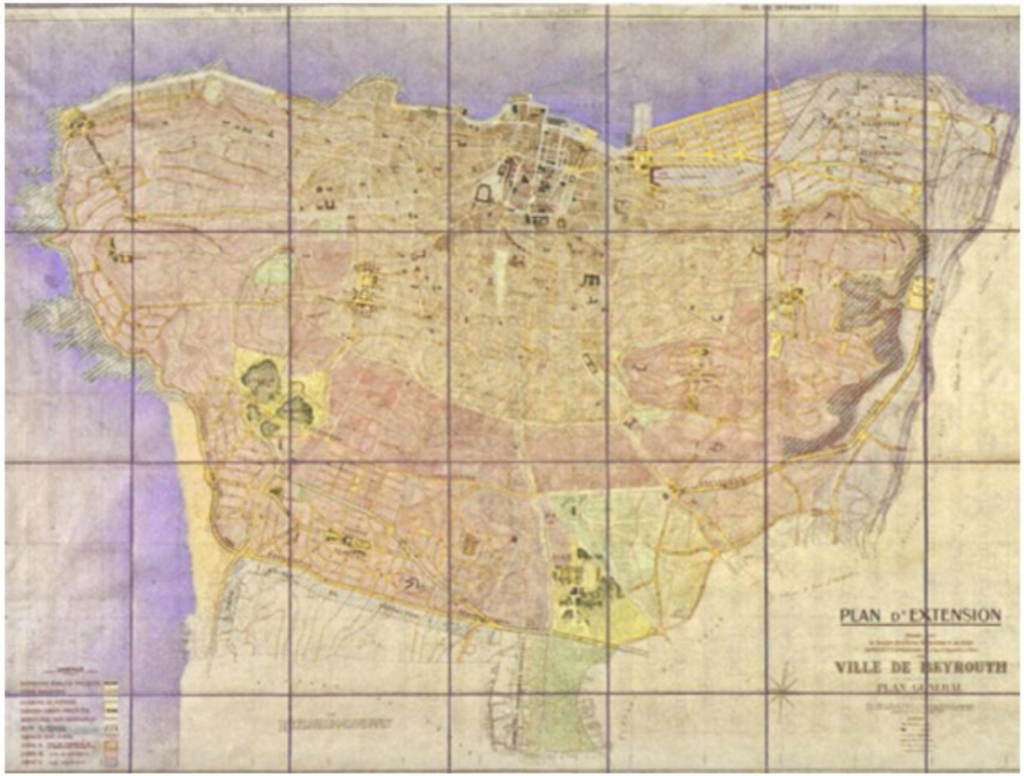
Development, embellishment and extention plan of Beirut – SPRV, Cabinet Danger Freres et Fils (1932). Source: Beyrouth sous mandat français. Construction d’une ville moderne. Karthala,2014.
Have Any Question?
Have a project in mind? Let’s bring your vision to life. Get in touch with us today!